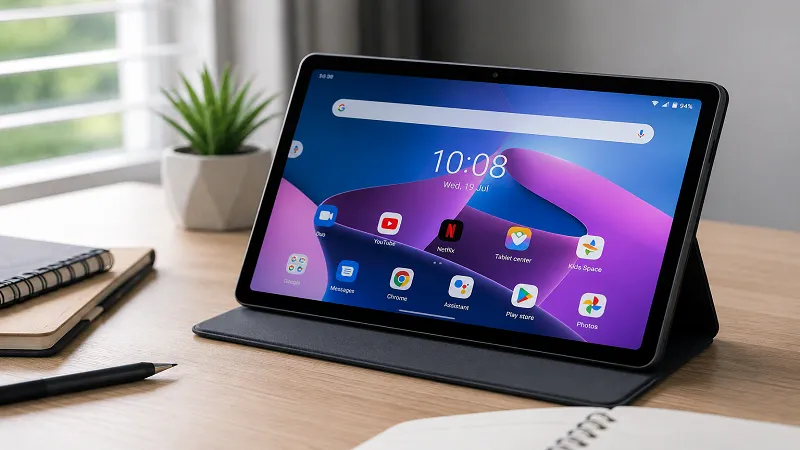
Technology has transformed the way people work, study, communicate, and enjoy entertainment. Among the most popular portable devices today are tablets, which combine the convenience of smartphones with the larger displays and improved productivity of laptops. Whether you are a student, professional, traveler, or casual user, a tablet can simplify your daily routine.
This guide explores the concept of the abithelp tablet, explaining what users generally expect from a modern tablet, its practical applications, important features, advantages, limitations, and tips for choosing the right device. Rather than focusing on a specific manufacturer’s specifications, this article serves as a comprehensive guide to understanding how a modern tablet can fit into different lifestyles.
What Is a Modern Tablet?
A tablet is a portable touchscreen computer designed for everyday tasks. It typically runs on a mobile operating system and supports applications for communication, education, entertainment, creativity, and productivity.
Unlike traditional desktop computers, tablets are lightweight, battery-efficient, and easy to carry anywhere. Many modern tablets also support accessories such as keyboards, styluses, wireless mice, and external storage devices, making them versatile tools for work and study.
Understanding the abithelp tablet
The abithelp tablet can be viewed as a modern tablet concept that focuses on convenience, portability, and user-friendly functionality. Instead of replacing a laptop completely, it complements everyday activities by offering quick access to digital tools, online services, and multimedia content.
Its purpose is to help users stay productive while remaining mobile, whether they are attending online classes, managing office work, reading eBooks, or streaming their favorite content.
Why Tablets Continue to Grow in Popularity
Several factors contribute to the increasing demand for tablets around the world.
Easy to Carry
Tablets are much lighter than laptops, making them ideal for travel, business meetings, classrooms, and remote work.
Touchscreen Simplicity
The intuitive touchscreen interface makes navigation easy for users of all ages.
Long Battery Life
Most tablets are designed to last throughout the day, reducing the need for frequent charging.
Entertainment Hub
From movies and games to music and digital books, tablets offer countless entertainment options.
Productivity Support
Modern productivity apps allow users to create documents, manage emails, edit presentations, and attend virtual meetings.
Key Features to Look for in a Tablet
Choosing the right tablet requires understanding the most important hardware and software features.
Display Quality
A high-resolution display improves reading, streaming, gaming, and creative work.
Important factors include:
- Screen size
- Brightness
- Color accuracy
- Resolution
- Refresh rate
Processor Performance
The processor determines how smoothly the tablet handles applications.
A faster processor provides:
- Better multitasking
- Faster app loading
- Improved gaming performance
- Better video editing capability
RAM
RAM affects how many applications can run simultaneously.
Recommended options include:
- 4GB for basic users
- 6GB for students
- 8GB or more for professionals
Storage Capacity
Storage requirements depend on user needs.
Common choices include:
- 64GB
- 128GB
- 256GB
- 512GB
Cloud storage can also help save local space.
Battery Performance
Battery life is one of the biggest advantages of tablets.
Good battery optimization allows users to:
- Attend online meetings
- Watch videos
- Read books
- Browse the internet
- Complete assignments
without worrying about constant charging.
Camera Quality
Although tablets are not primarily photography devices, quality cameras are useful for:
- Video calls
- Online classes
- Document scanning
- Virtual meetings
Audio Experience
Modern stereo speakers significantly improve entertainment and video conferencing.
Good sound quality makes movies, games, and music more enjoyable.
Everyday Uses of Tablets
Education
Students use tablets for:
- Digital textbooks
- Online learning
- Homework
- Research
- Educational applications
Teachers also use tablets to manage classrooms and prepare lessons.
Business
Professionals rely on tablets for:
- Email management
- Video conferences
- Digital presentations
- Cloud collaboration
- Project management
Entertainment
A tablet provides access to:
- Movies
- TV shows
- Games
- Music
- Social media
- Reading platforms
Creative Work
Creative users can enjoy:
- Drawing
- Graphic design
- Photo editing
- Video editing
- Note-taking
Many artists pair tablets with stylus pens for improved precision.
Reading
Large displays make tablets perfect for:
- eBooks
- PDF documents
- Newspapers
- Magazines
- Research papers
Travel
Travelers benefit from tablets by using them for:
- Flight bookings
- Maps
- Navigation
- Language translation
- Entertainment during trips
Advantages of Using Tablets
Some of the biggest benefits include:
Portable Design
Easy to carry in backpacks and handbags.
User-Friendly Interface
Simple navigation makes tablets accessible to beginners.
Excellent Battery Backup
Most devices easily support a full day of regular usage.
Fast Internet Access
Wi-Fi and mobile connectivity allow users to stay connected almost anywhere.
Multi-Purpose Device
One tablet can replace several everyday gadgets for browsing, reading, streaming, and note-taking.
Possible Limitations
Although tablets are highly capable, they also have some limitations.
Limited Desktop Software
Certain professional software still performs better on desktop computers.
Smaller Screen
Compared to laptops, multitasking can feel slightly restricted.
Storage Limitations
Entry-level models may require cloud storage for larger files.
Tips for Choosing the Right Tablet
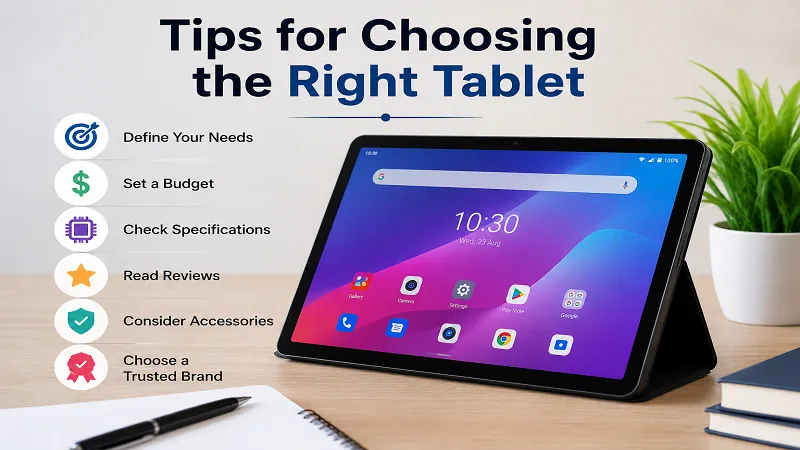
Before purchasing any tablet, consider the following:
Define Your Purpose
Ask yourself whether you need it for:
- Education
- Office work
- Gaming
- Reading
- Entertainment
- Graphic design
Set a Budget
Choose a device that balances features and affordability.
Higher prices do not always guarantee the best experience for every user.
Compare Specifications
Look at:
- Display
- Processor
- RAM
- Storage
- Battery
- Camera
Rather than focusing only on brand names.
Read User Reviews
Independent reviews often provide valuable insight into real-world performance.
Consider Accessories
Useful accessories include:
- Stylus
- Bluetooth keyboard
- Protective cover
- Screen protector
- Wireless earbuds
Tablet Safety Tips
Protect your device by following these recommendations.
Update Software
Install updates regularly for improved security.
Use Strong Passwords
Protect personal information using secure passwords or biometric authentication.
Install Trusted Apps
Download applications only from official app stores.
Backup Important Data
Cloud backups prevent data loss.
Protect the Screen
Use a durable protective case and screen protector.
Improving Tablet Performance
To maintain smooth performance:
- Remove unused apps.
- Clear unnecessary files.
- Restart the device occasionally.
- Keep software updated.
- Avoid filling storage.
- Use trusted antivirus software when appropriate.
Future of Tablet Technology
Tablet technology continues to evolve rapidly.
Future developments may include:
- Faster processors
- AI-powered productivity features
- Improved battery efficiency
- Better stylus support
- Foldable displays
- Enhanced multitasking
- Smarter voice assistants
- Stronger security features
These innovations will make tablets even more useful for education, business, and entertainment.
Frequently Asked Questions
Is a tablet good for students?
Yes. Tablets are excellent for reading, taking notes, attending online classes, and completing assignments.
Can a tablet replace a laptop?
For many everyday tasks, a tablet can serve as a practical alternative. However, specialized professional software may still require a laptop or desktop computer.
What accessories are useful for a tablet?
Popular accessories include keyboards, styluses, protective cases, screen protectors, and wireless headphones.
How much storage should I choose?
For general users, 128GB is often sufficient. Users who store many videos, games, or large files may benefit from higher capacities.
Are tablets suitable for entertainment?
Absolutely. Tablets are ideal for streaming movies, playing games, reading eBooks, browsing the web, and listening to music.
Conclusion
Tablets have become an essential part of modern digital life by offering a balance between portability, performance, and convenience. Whether you are learning, working remotely, creating digital content, or simply relaxing with your favorite entertainment, a tablet can provide an efficient and enjoyable experience.
By understanding the key features, advantages, and best practices discussed in this guide, you can make a more informed decision when selecting a device that meets your needs. With continuous improvements in hardware and software, tablets are likely to remain valuable companions for users of all ages in the years ahead.